Airway, Breathing & Dental Health
Why we may ask how you sleep: your breathing and your oral health are connected, from dry mouth to sleep apnea.
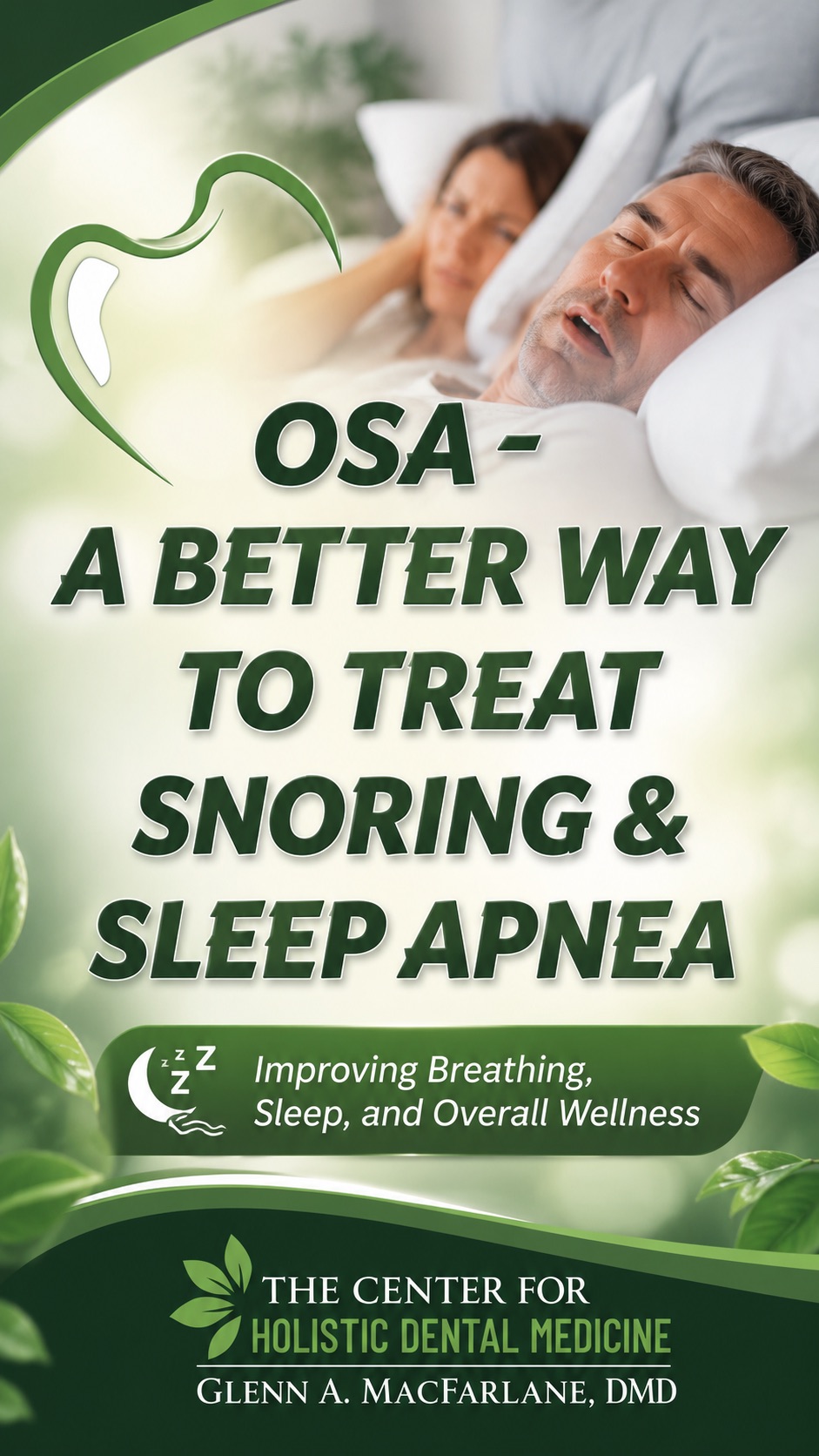
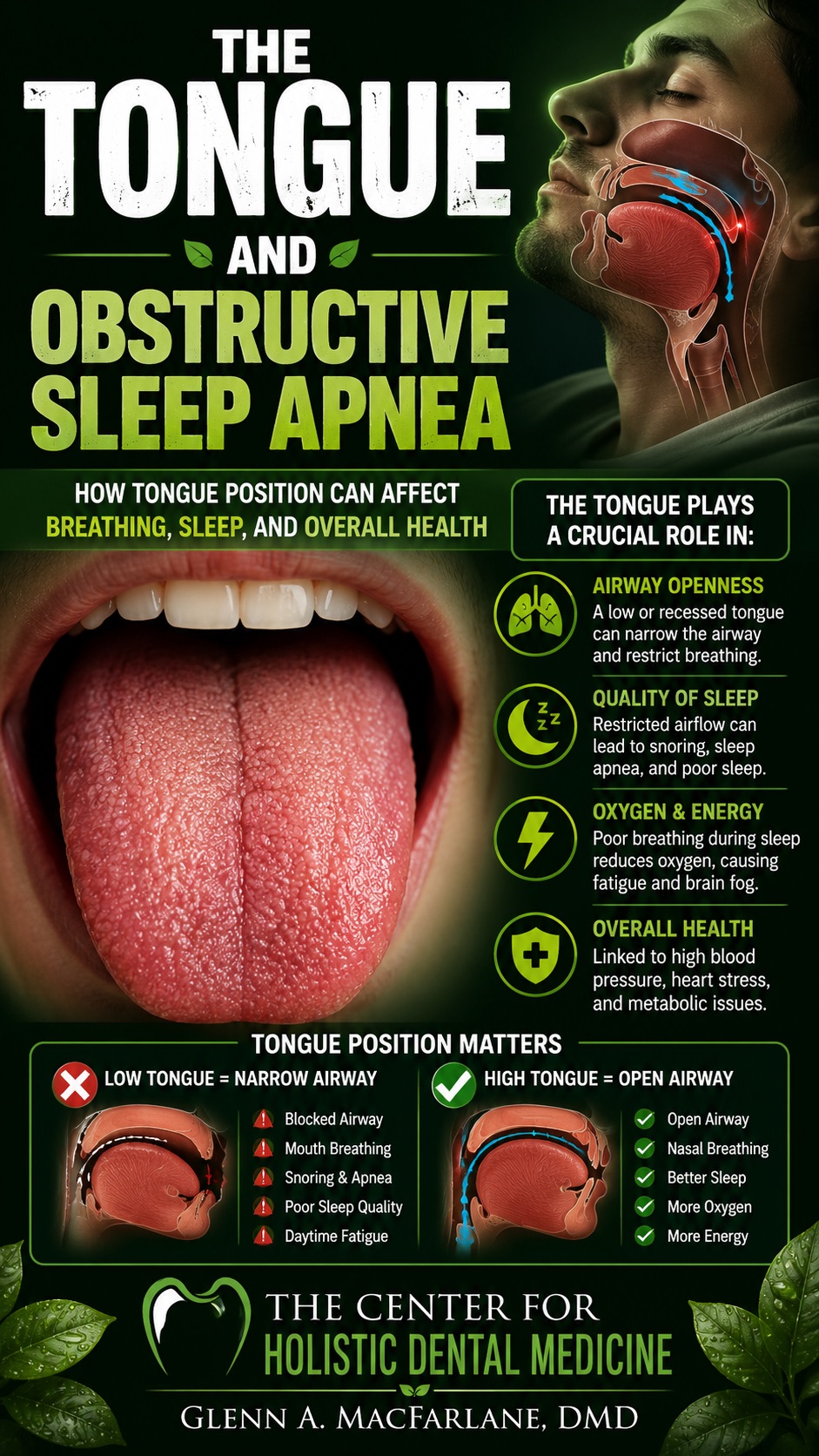
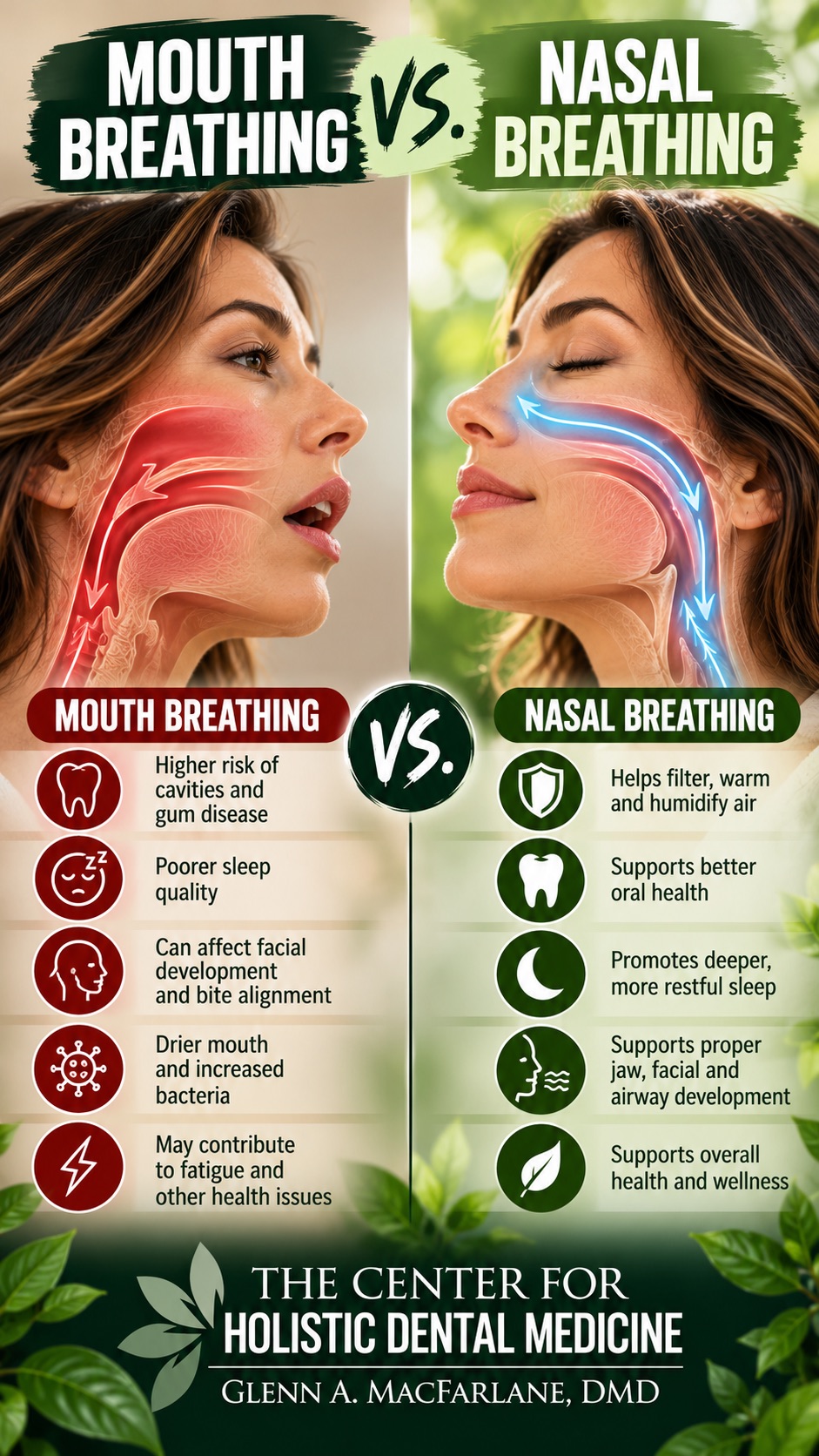
Your breathing and your oral health are connected, which is why we ask about your sleep. Your nose helps filter, warm, and humidify the air you breathe. Frequent mouth breathing can dry oral tissues, and because saliva helps protect teeth, persistent dryness can increase cavity risk. During sleep, the tongue and throat muscles relax, and in some people the airway narrows or closes repeatedly. This is obstructive sleep apnea, and signs like loud snoring, gasping, morning headaches, or daytime sleepiness deserve attention. A dental exam alone cannot diagnose sleep apnea, so we look for oral signs and coordinate care when needed. For suitable patients, a professionally fitted custom oral appliance can hold the lower jaw forward during sleep to help keep the airway open.
Learn more about airway-focused holistic care at our Red Bank, NJ office.
Have questions about Airway, Breathing & Dental Health? Schedule a consultation with Dr. Glenn MacFarlane.
Keep exploring
Related Videos
Airway, Breathing & Dental Health Transcript
Why would your dentist ask how you sleep? Because your breathing and your oral health are connected. Your nose helps filter, warm, and humidify the air you breathe.
Frequent mouth breathing can dry oral tissues. Saliva helps protect teeth, so persistent dryness can increase cavity risk. During sleep, the tongue and throat muscles relax.
In some people, this allows the airway to narrow or close repeatedly. This is obstructive sleep apnea. It can lower oxygen levels and interrupt sleep, sometimes without you remembering those awakenings.
Loud snoring, gasping, morning headaches, or daytime sleepiness deserve attention. But mouth breathing alone does not mean you have sleep apnea. At the Center for Holistic Dental Medicine, we look for oral signs and ask about sleep.
A dental exam alone cannot diagnose sleep apnea. Medical evaluation and sleep testing are needed. Treatment depends on the cause.
For suitable patients, a custom oral appliance can hold the lower jaw forward during sleep, helping keep the airway open. It requires professional fitting and follow-up, not just an ordinary night guard. Our role is to recognize concerns, protect your oral health, and coordinate care when needed.
Because good dental care considers more than your smile. It considers how you breathe, too.