Digital X-Rays & CBCT in Red Bank, NJ
Safer, Faster, More Accurate Dental Imaging
Accurate diagnosis is the foundation of effective dental care. At The Center for Holistic Dental Medicine, Dr. Glenn A. MacFarlane uses digital radiography and advanced 3D cone beam computed tomography (CBCT) to see what the naked eye cannot, with significantly less radiation than traditional film x-rays and no chemical processing required. These tools allow us to detect problems earlier, plan treatments more precisely, and keep your exposure to radiation as low as possible. CBCT is especially valuable when planning ceramic implant placement.
What it is
Digital x-rays use an electronic sensor instead of film to capture detailed images of your teeth, jawbone, and surrounding structures. CBCT takes this further with full 3D imaging for complex diagnostic and treatment planning needs.
Who it's for
Every patient benefits from digital imaging during routine exams. CBCT is especially valuable for patients needing implant planning, oral surgery evaluation, airway assessment, or complex diagnostic workups.
Our approach
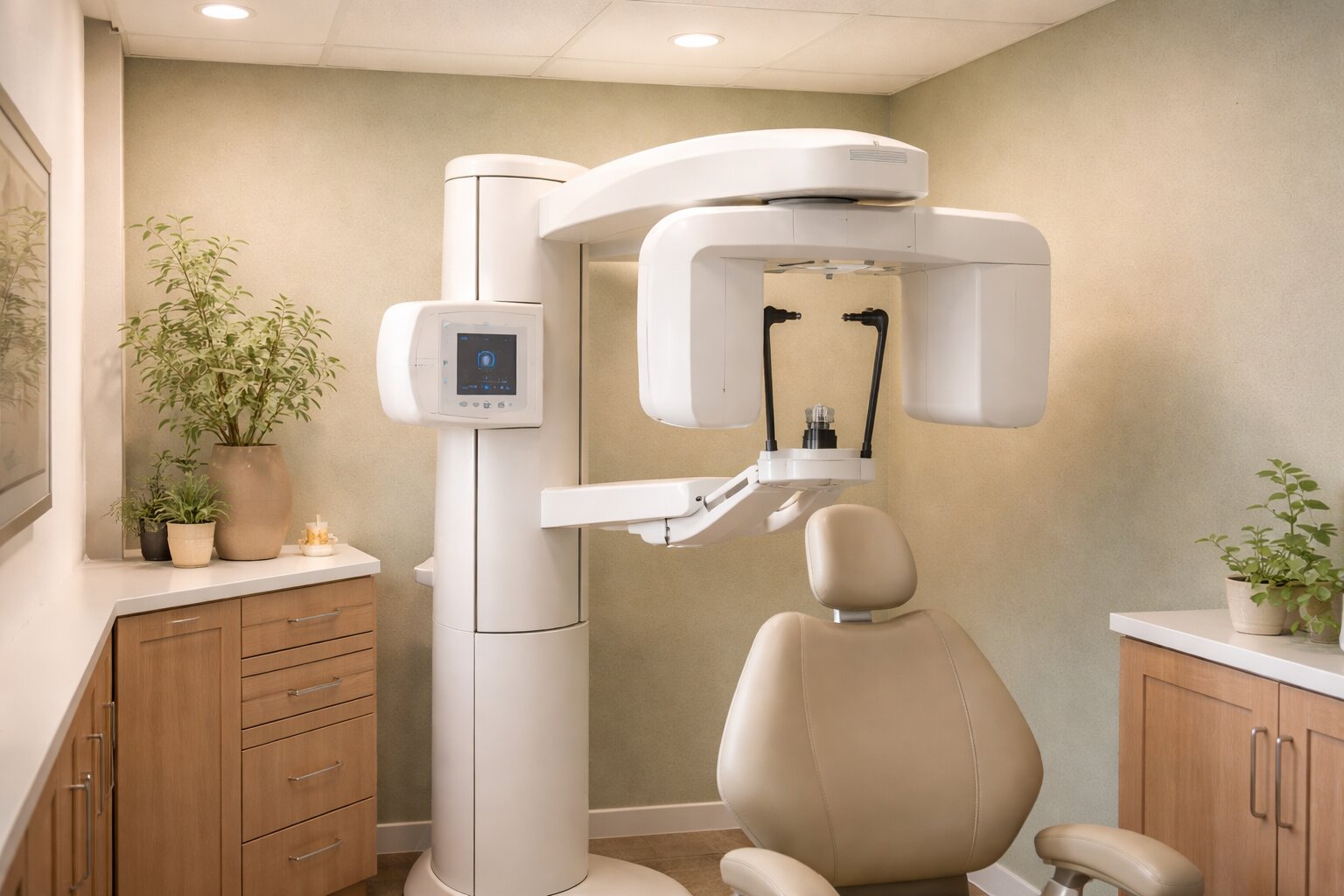
Dr. MacFarlane uses the PreXion Excelsior CBCT system for 3D imaging and digital sensors for standard x-rays, prioritizing diagnostic accuracy while minimizing your radiation exposure.
Need a thorough dental evaluation? Our advanced imaging technology ensures nothing is missed.
Digital X-Rays
Digital x-rays have replaced traditional film radiography in our practice for good reason. A small electronic sensor captures high-resolution images of your teeth and jawbone, and the results display instantly on a monitor, with no waiting for film development and no chemical processing waste. Most importantly, digital x-rays emit up to 90% less radiation than conventional film x-rays, aligning with our commitment to keeping your care as safe and non-invasive as possible.
These images allow Dr. MacFarlane to detect a wide range of conditions that may not be visible during a visual examination alone, enabling earlier intervention and more conservative treatment.
What We Can Detect
- Decay between teeth: Cavities forming in areas hidden from visual inspection
- Bone loss: Early signs of periodontal disease affecting the supporting bone structure
- Infections and abscesses: Bacterial infections at the root tips or within the jawbone
- Cysts and tumors: Abnormal growths that require further evaluation
- Fractures: Cracks in teeth or existing restorations that may need repair
- Developmental abnormalities: Issues with tooth positioning, impacted teeth, or growth patterns
Advantages Over Film
- Up to 90% less radiation: Dramatically reduced exposure compared to traditional film
- Instant results: Images appear on-screen in seconds with no chemical processing
- Enhanced detail: Digital images can be zoomed, adjusted, and enhanced for better diagnostic accuracy
- Environmentally friendly: No chemical waste from film development, consistent with our eco-friendly practice
- Easy sharing: Images can be securely shared with specialists or insurance providers electronically
- Permanent digital record: Images are stored digitally and never degrade over time

3D Cone Beam CT (CBCT) Imaging
For cases that require more detailed diagnostic information, Dr. MacFarlane uses the PreXion Excelsior CBCT, a remarkable 3D imaging system that provides a complete, three-dimensional view of your teeth, jawbone, nerve pathways, sinuses, and surrounding structures in a single scan. This level of detail is invaluable for treatment planning and ensures the highest degree of precision and safety.
CBCT Applications
- Implant planning: Precise measurement of bone density, width, and proximity to nerves for safe implant placement
- Oral surgery evaluation: Detailed visualization of impacted teeth, cysts, and complex anatomy
- Sinus assessment: Evaluation of sinus conditions that may affect dental treatment planning
- Sleep apnea airway analysis: 3D mapping of the airway to assist in diagnosing and treating sleep-related breathing issues
- TMJ evaluation: Detailed views of the temporomandibular joint to assess dysfunction and guide treatment
Why It Matters
- Complete 3D visualization: See anatomy from every angle rather than a flat two-dimensional image
- More accurate treatment planning: Reduces guesswork and improves surgical outcomes
- Lower radiation than medical CT: CBCT delivers a fraction of the radiation of a hospital CT scan
- Fast and comfortable: A single scan takes seconds and requires no special preparation
- Fewer surprises during treatment: Comprehensive imaging means potential complications are identified before treatment begins
Advanced imaging means more precise, safer treatment. Schedule your evaluation with Dr. MacFarlane today.
What to Expect
Digital x-rays are a routine part of your dental exam and take just a few moments. A small sensor is placed in your mouth, and the image appears on-screen almost instantly. The process is quick, comfortable, and involves very minimal radiation exposure.
If a CBCT scan is needed, you will stand or sit while the imaging unit rotates around your head in a single, smooth motion. The scan typically takes less than 30 seconds, and there is no discomfort involved. No special preparation is required. Dr. MacFarlane will review the 3D images with you, explaining the findings and how they inform your treatment plan.
In both cases, your images become part of your permanent digital record and can be referenced at any future visit, shared with specialists if needed, or compared over time to monitor changes in your oral health.
See your dental health in a whole new dimension. Contact us today to schedule your appointment.
Frequently Asked Questions
Experience advanced diagnostic imaging with minimal radiation exposure. Call (732) 530-4020 to schedule your visit at The Center for Holistic Dental Medicine in Red Bank, NJ.